


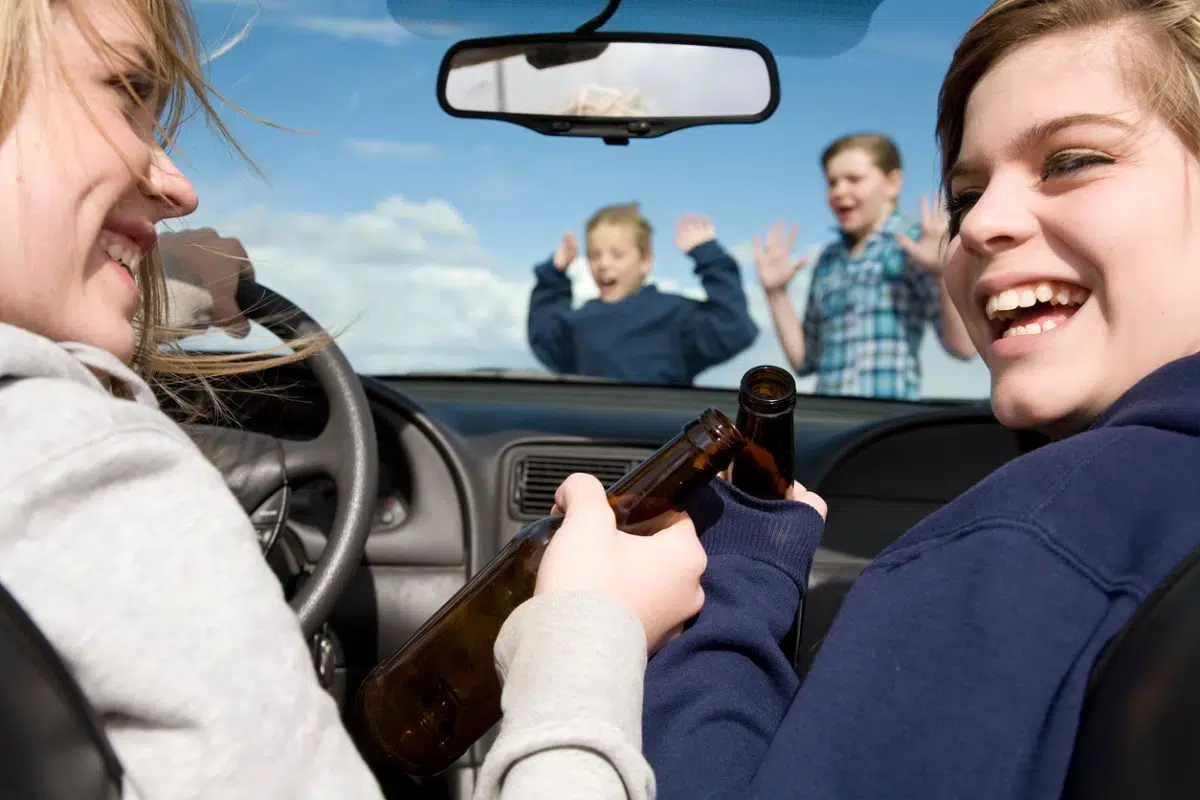


A DUI stop is stressful on its own. When a child is in the vehicle, the situation becomes far more serious. California law treats DUI cases involving minors with heightened concern, and prosecutors often seek harsher penalties from the start. A single traffic stop can quickly turn into multiple charges with long-term consequences.
At Gressley & Donaldson, we handle DUI defense matters across California and understand how child endangerment allegations can shift the course of a case. This article explains how DUI with a child in the car is charged, what penalties may apply, and how the presence of a minor affects both prosecution strategy and defense options. If you are facing charges, knowing what comes next can help you make informed decisions.
Understanding DUI With a Child in the Car in California
In California, a DUI with a child in the car begins with the same base offense, driving under the influence or driving with a blood alcohol content of 0.08 percent or higher. What changes the situation is the presence of a minor in the vehicle during the stop. That single fact can expose a driver to increased penalties or even a separate child endangerment charge.
These cases center on safety rather than outcomes. Under California law, prosecutors focus on the risk a drunk driver creates for a child, not whether an accident occurred. A DUI can still be treated as a more serious offense when a child passenger is involved, even if no one was injured.
California Vehicle Code § 23572 allows courts to impose mandatory jail time when a child under the age of 14 is in the car during a DUI. This provision operates as a sentence enhancement, meaning it adds punishment to the underlying DUI offense rather than creating a new DUI charge. A traffic stop that might otherwise result in standard DUI penalties can escalate quickly once an officer confirms a child is present.
In addition, prosecutors may file child endangerment charges under Penal Code section 273a as a separate charge. Whether that happens depends on the facts of the stop, the child’s age, and the level of risk officers and prosecutors believe was involved. Those decisions often shape how the case is charged and defended from the very beginning.
This leads to how risk is evaluated, and what standards law enforcement and prosecutors use to decide when child endangerment applies in DUI cases.
How Child Endangerment Applies to DUI Cases
Child endangerment in a DUI case focuses on risk, not results. The legal question is whether the driver placed a child in a situation that created an unreasonable risk of harm, even if the child was not physically injured. This is why a DUI stop with no accident can still lead to serious criminal charges.
Under Penal Code section 273a, prosecutors examine whether the driver willfully caused or allowed a child to be placed in a dangerous situation. They do not need to prove that the child suffered physical pain or injury. Instead, they evaluate the overall circumstances of the stop to decide whether the conduct rises to the level of a child endangerment offense.
Law enforcement officers and prosecutors typically review several factors when deciding whether to pursue child endangerment charges or seek a penalty enhancement. These details help them assess how much risk the child faced at the time of the stop:
- The driver’s level of impairment, including blood alcohol content or signs of drug use
- Driving patterns, such as speeding, weaving, or near-collisions, captured on video
- The child’s age, use of a seat belt or car seat, and length or timing of the drive
- Open containers, unsafe vehicle conditions, or aggressive driving behavior
When prosecutors believe the risk was significant, they may file both the underlying DUI charge and a separate child endangerment charge. That charge can be prosecuted as a misdemeanor or a felony, depending on the circumstances.
With this framework in place, it becomes easier to understand how California’s DUI child enhancement works and how it adds to the penalties tied to the underlying DUI offense.
California’s DUI Child Endangerment Law
California Vehicle Code section 23572 increases punishment when a person is convicted of a DUI offense and has a child under the age of 14 in the vehicle at the time of the stop. This law adds mandatory jail time to the sentence tied to the underlying DUI conviction. If the enhancement applies, courts are required to impose additional jail days.
It is important to understand how enhancements differ from separate charges. A sentence enhancement increases the punishment for an existing offense, in this case, the DUI. It does not create a new DUI charge. By contrast, Penal Code section 273a, the child endangerment statute, is a separate charge that carries its own potential penalties and can be filed alongside the DUI.
Prior DUI history plays a major role in the amount of extra jail time added under Vehicle Code section 23572. The more prior DUI convictions within the applicable period, the longer the mandatory jail sentence becomes. The breakdown below shows how the enhancement applies based on the number of DUI convictions.
Mandatory Jail Time Under California Vehicle Code § 23572
| DUI Convictions | Additional Jail Time When a Child Under 14 Was in the Car |
| First offense | 48 hours |
| Second offense | 10 days |
| Third offense | 30 days |
| Fourth offense or more | 90 days |
This penalty enhancement can apply even when no collision occurred, and the child was not injured. A common misconception is that having a child in the car automatically turns a DUI into a felony. That is not how section 23572 works. However, prosecutors may still pursue felony charges under Penal Code section 273a if they believe the facts show a high level of risk.
Next, it helps to look at how these enhancements affect the overall penalties in a DUI case and how they differ from those for a standard first- or second-offense DUI.
DUI With Child in Car: Penalty Overview in California
A DUI with a child in the car carries all the standard penalties associated with a DUI, plus additional penalties tied to the child endangerment enhancement. You still face the usual consequences, including fines, DUI education programs, license suspensions, and ignition interlock requirements in many counties. The mandatory jail time required under California Vehicle Code section 23572 is added to the standard DUI penalties.
When a child passenger is involved, judges often impose stricter probation conditions. Courts may require counseling or classes focused on parenting, safety, or substance use, and they may place tighter restrictions on alcohol consumption while the case is pending or during probation.
Common penalties in these cases may include:
- Extra jail time required under section 23572 based on the DUI count
- Higher fines and increased penalty assessments in some cases
- Longer DUI education programs and treatment requirements
- Stricter probation terms, including community service or regular court check-ins
- Court-ordered counseling related to alcohol use or parenting responsibilities
Penalties increase with prior DUI convictions, such as a second, third, or fourth offense DUI, and with how serious the facts appear to prosecutors and judges. The circumstances of the stop, including the level of impairment and perceived risk to the child, can strongly influence how aggressively the case is handled.
Short-term punishment is only part of the impact. A DUI conviction involving a child can also carry long-term consequences that affect employment, driving privileges, and family life.
Long-Term Consequences of DUI and Child Endangerment Charges
DUI and child endangerment charges can affect your life long after the court case ends. A DUI conviction may lead to higher insurance rates, and many employers conduct background checks that flag criminal charges involving impaired driving. Certain professional licenses can also be placed at risk when a conviction appears on your record.
Family-related consequences often arise quickly when a child is involved. Courts may require proof of safe parenting practices, alcohol treatment, or ongoing compliance with probation terms. In some cases, child protective services may become involved to evaluate the home environment, supervision plans, or whether temporary protective custody is necessary.
Common long-term effects may include:
- A lasting criminal record that affects employment, housing, or licensing
- Immigration concerns in some cases, depending on status and the nature of the conviction
- Custody or visitation changes, sometimes requiring supervision or testing
- Emotional strain and stigma that disrupt family routines, school activities, and relationships
These ripple effects show why cases involving DUI and child endangerment require a careful and timely defense approach. Early legal action can help limit exposure to added penalties and reduce long-term damage.
That brings us to strategy, and why allegations of child endangerment significantly change how a DUI case is defended.
Why Child Endangerment Changes the Legal Strategy in DUI Cases
When a child is in the car, a DUI case becomes about more than a breath test number. Prosecutors shift the focus to risk, judgment, and whether the driver’s conduct created an unreasonable risk to a minor. As a result, the defense strategy must address safety and context, not just the underlying DUI charge and chemical testing.
Cases involving DUI and child endangerment are often pursued more aggressively. Judges and jurors tend to view the presence of a child as an aggravating circumstance, which gives prosecutors leverage when arguing for enhanced penalties or a sentence enhancement. Small details can influence charging decisions, such as whether the child was properly restrained or whether another responsible adult was present in the vehicle.
Defense strategies in these cases commonly focus on both the DUI investigation and the child endangerment allegations. This may include challenging probable cause for the traffic stop, questioning the reliability of field sobriety or chemical tests, and disputing whether the facts support a claim of criminal negligence. The defense also highlights facts that reduce perceived risk, such as short distances driven, cautious driving, and immediate steps taken to protect the child.
Not every DUI with a child justifies a penalty enhancement or results in a child endangerment conviction. With early legal help, it may be possible to limit added jail exposure or prevent a separate child endangerment charge from moving forward.
Our approach focuses on what actually happened, what can be proven in court, and how to reduce the impact of these charges on your criminal record, your family, and your future.
Facing DUI Charges? Contact Us for a Consultation
Gressley & Donaldson defends DUI cases across California with a strong track record in court and at the DMV. We work to protect your record, your family, and your future, and we fight for the best results the law allows. Feel free to call us at 951-319-3199 or reach out through our Contact Us page. We welcome your questions and are ready to talk through the next steps right away.