



Riverside Marijuana DUI Lawyer
After the passage of Proposition 64 in 2016, adult recreational use of marijuana became legal across the State of California. However, residents may still face legal consequences for cannabis use under certain circumstances, an obvious example of which is a “DUI of marijuana.”
The California Office of Traffic Safety states that marijuana can increase the chance of a crash by up to 35%, highlighting its ability to affect reaction times, coordination, and balance. While DUI legislation and drug testing technology are still adjusting to the decriminalization of marijuana, you can certainly face criminal penalties for driving under the influence of marijuana.
If you’ve been charged with driving under the influence of marijuana, you may be feeling confused and concerned about what this accusation means for your future. You don’t have to navigate your legal options alone—Gressley & Donaldson is here to help. This article will explain everything you need to know about marijuana DUI cases in California, including legal definitions, potential penalties, and common legal defenses.
Ready to protect your future? The first step is choosing the right legal partner. Our dedicated DUI defense attorneys can mount an aggressive defense on your behalf. Contact our law office to schedule your case evaluation.
What Is Driving Under the Influence of Marijuana in California?
Marijuana DUI laws fall under Vehicle Code 23152. The relevant section simply states that it is illegal to drive a vehicle while under the influence of drugs. VC 23152 also states that you cannot be under the combined influence of alcohol and drugs while operating a vehicle. In addition, you may face criminal consequences for operating a vehicle while “addicted” to a drug, although this does not apply to those currently engaged in treatment programs.
While there is no specific mention of marijuana under VC 23152, many of the general legal definitions apply to all forms of DUI, whether they involve alcohol, marijuana, prescription drugs, or any other intoxicating substance.
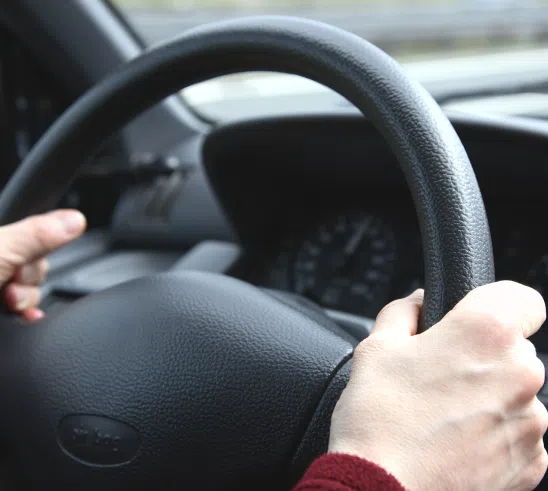
Defining “Vehicles” Under VC 23152
It is important to understand that the term “vehicle” applies to a wide range of possible things in California. A vehicle does not require motorization to fall under DUI laws, and you can theoretically face a marijuana DUI for operating a bicycle while under the influence. The same logic applies to e-bikes, golf carts, scooters, and various other vehicles.
Defining “Driving” Under VC 23152
In most cases, the vehicle must be in motion to satisfy the “driving” requirement under Vehicle Code 23152. However, there are situations in which defendants in stationary vehicles could face DUI marijuana charges. For example, if you pass out while driving and your vehicle rolls to a stop in the middle of an empty intersection, a law enforcement officer may charge you with a marijuana DUI.
You might also face a marijuana DUI if you pull over and use cannabis while parked, as you are technically still in the process of traveling to your destination. However, if you park your vehicle in your private driveway and use cannabis before getting out, you will likely not face marijuana DUI charges.
Defining “Under the Influence” Under VC 23152
The legal definition of “under the influence” is perhaps the most elusive. Generally speaking, this applies to noticeable marijuana-induced effects on your nervous system, brain, or muscles. These effects must result in some kind of detectable abnormality in mental or physical functioning.
Proving a Marijuana DUI
It may be difficult for police to prove that you are under the influence of marijuana. While the breathalyzer test can effectively detect the presence of your blood alcohol concentration (BAC), no similar test exists for marijuana. Instead, police rely on chemical tests or field sobriety tests (FSTs).
An FST might involve standing on one leg, reciting the alphabet backward, eye tracking, and other techniques—all of which are unreliable in detecting marijuana intoxication. According to the University of California San Diego, these tests are “not accurate enough,” and even the National Institute of Justice admits that FSTs are “not sensitive” to cannabis intoxication.
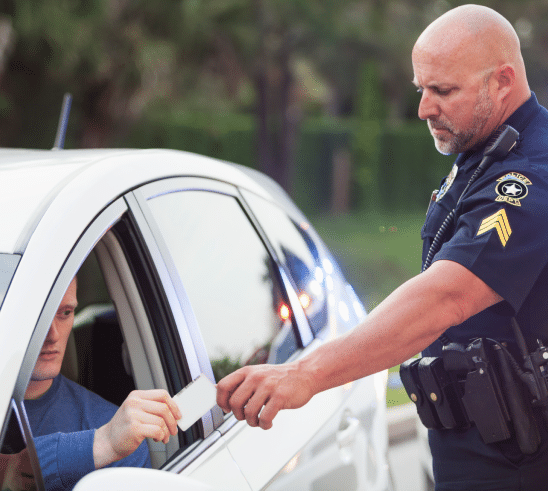
Police Chemical Tests for Cannabis
Police in California may rely on a range of chemical tests to establish the presence of marijuana and/or marijuana impairment . These might include saliva tests, urine tests, and blood tests.
You may face several different chemical tests, depending on what arresting officers have at their disposal. If they offer more than one testing option, you can choose.
The National Highway Traffic & Safety Administration recommends that persons suspected of driving under the influence of marijuana be evaluated by a drug recognition expert (DRE). The reason NHTSA recommends a DRE evaluation is because the amount of THC in a person’s blood does not indicate whether or not a person is under the influence of marijuana. The federal government has confirmed this in its own research. Therefore, a DRE evaluation is important because it is designed to supposedly allows police officers to determine if a driver is in fact under the influence of a drug, including marijuana. The DRE is a 12-step process, and police officers should follow all 12-steps systematically.
Can I Be Convicted Without a Chemical Test?
In theory, an FST or DRE can lead to a marijuana DUI conviction even in the absence of a chemical test. However, an experienced DUI defense lawyer in California will lean into the lack of supporting evidence presented by the prosecution in this situation.
Other Types of Evidence
Prosecutors may point to the presence of marijuana or cannabis paraphernalia in your vehicle to establish recent or probable consumption. For example, you might have a marijuana pipe sitting on your passenger seat during the arrest. A cloud of smoke may also emanate from the vehicle when you roll down your window.
In some cases, the scent of marijuana could also help support a DUI conviction. However, it is important to note that police cannot search your vehicle without probable cause. Perhaps most notably, Proposition 64 prohibits police officers from searching your vehicle based on the presence of scent alone.
Refusing a Post-Arrest Chemical Test
If you refuse a chemical test in California, your license will be revoked for one year. Note that you may still face a marijuana DUI charge even if you refuse the test. Under certain circumstances, defendants may have the right to refuse blood tests for health reasons. It is important to understand that you only face consequences for refusing a chemical test after you have been arrested.
Police officers are not legally required to provide you with a chemical test unless you specifically request one. Requesting a test may be beneficial, especially if police attempt to attempt to arrest you based solely on the results of an FST.
Penalties for DUI of Marijuana
If you are convicted of marijuana DUI, you face the same penalties as an alcohol-related DUI. Unlike alcohol DUIs, however, your level of intoxication will not affect sentencing.
Misdemeanor Penalties
A first DUI offense with no injuries or aggravating factors can result in up to six months in jail, a fine of up to $1,000, probation, and license suspension. A second and third DUI may result in slightly higher penalties, but they will still be prosecuted as misdemeanors.
Felony Penalties
If you cause an accident resulting in injury to someone other than yourself, you may face a felony marijuana DUI charge. In addition, you may face a felony DUI charge if you have been convicted of three or more prior DUIs. Any felony within the past 10 years could also result in a felony marijuana DUI charge.
Penalties for marijuana DUI felonies include prison time, license suspension, probation, and fines. The penalties for a felony DUI offense are more serious compared to misdemeanor offenses, and they can affect your constitutional rights.c circumstances of your case. Contact our team at Gressley & Donaldson to explore your defense options.
Legal Defenses to Marijuana DUI
Too many people accused of marijuana DUI assume they can’t beat their charges, but they’re wrong. An experienced marijuana DUI lawyer can help you explore a range of possible legal defenses to combat your charges. We will discuss a few of the common defenses to DUI of marijuana below.
You Didn’t Use Marijuana
The most obvious defense strategy is to establish that you did not use marijuana. The unreliable nature of chemical tests and FSTs provides plenty of opportunities to question evidence laid against you.
You Recently Used Marijuana But Were Not Intoxicated at the Time
Marijuana can remain in your system long after consumption. A drug test may detect the presence of cannabis that you smoked months ago—cannabis that could not have possibly affected your driving at the time you were pulled over. Past marijuana use is not sufficient evidence to convict you of driving under the influence of marijuana.
You Used Marijuana, But Your Driving Was Not Impaired
Remember, prosecutors must prove that you were “under the influence” of marijuana while driving. Even if you consumed marijuana, this may not have noticeably affected your driving ability. As long as you operated your vehicle with the same level of caution as a sober person, it may be very difficult to establish that you were intoxicated.
Marijuana DUI FAQs
A marijuana DUI occurs when a driver operates a vehicle under the influence of cannabis, including THC from recreational or medical marijuana, impairing driving ability.
Penalties include fines, license suspension, mandatory DUI education programs, probation, and potential jail time for repeat offenses or accidents.
California law prohibits driving under the influence of marijuana under Vehicle Code 23152(f). Unlike other states, California does not have a per se limit for delta-9 THC in a driver’s blood. This means that the prosecution cannot prove a marijuana DUI by simply showing the driver had some amount of THC in their blood, but are required to prove impairment based on law enforcement’s investigation.
Officers assess balance, coordination, eye movement, and behavior. These tests were designed for alcohol DUI investigations, not marijuana. Specialized tests by Drug Recognition Experts (DRE) allegedly allow officers to determine if a driver is under the influence of marijuana, but the data regarding the reliability of the DRE is not convincing.
Toxicology labs test blood for THC and THC metabolites. While there is no strict legal limit for THC in blood, measurable THC blood results plus observed impairment is the evidence that prosecutors rely on to prove their case.
Yes. Defenses include challenging the legality of the traffic stop, other search and seizures, accuracy of chemical tests, improper officer investigation, or proving lack of impairment.
First-time offenders may face fines, probation, DUI school, and license suspension. Jail time is possible in certain circumstances or if combined with other charges.
Yes. Medical marijuana use does not exempt a driver from DUI laws. Impairment while driving is the key factor, regardless of medical authorization.
Alcohol DUI is typically based on BAC levels (0.08%), whereas marijuana DUI is based on observed impairment and THC presence. THC can remain in the system longer, complicating testing.
The DMV cannot take independent action against a driver in a DUI drug case, unless there is an alleged refusal. But a drug DUI conviction carries a license suspension, the length of which depends on the nature of the offense.
Yes. Repeat offenders face longer license suspensions, higher fines, mandatory jail time, and extended DUI education programs.
Yes. Defense attorneys can question officer training, test administration, environmental factors, and alternative explanations for poor performance.
The federal government has published literature indicating that blood marijuana results do not correlate to impairment. This means that the amount of THC levels in blood cannot be used to demonstrate a person is impaired by marijuana for purposes of driving.
Yes. Combined substance DUI is charged under Vehicle Code 23152(g).
An experienced attorney can challenge evidence, navigate chemical and field sobriety testing complexities, represent you at DMV hearings, and work to reduce or dismiss DUI charges. Our firm has conducted numerous drug DUI trials, with success.
Gressley & Donaldson: Top Marijuana DUI Attorneys in California
While it is true that marijuana intoxication can be challenging to prove, you should still take these criminal charges seriously. The best defense strategy for you depends on the details of your case, and online research cannot provide you with personalized guidance. To approach this situation in a confident, efficient manner, you need to partner with a top-tier criminal defense attorney. Contact Gressely & Donaldson to schedule a consultation today.

contact us to start building your defense
We understand that being accused of a crime is one of the most challenging times of your life. Rely on us to advocate for your rights and to give you the defense you deserve.

